The complete football kit
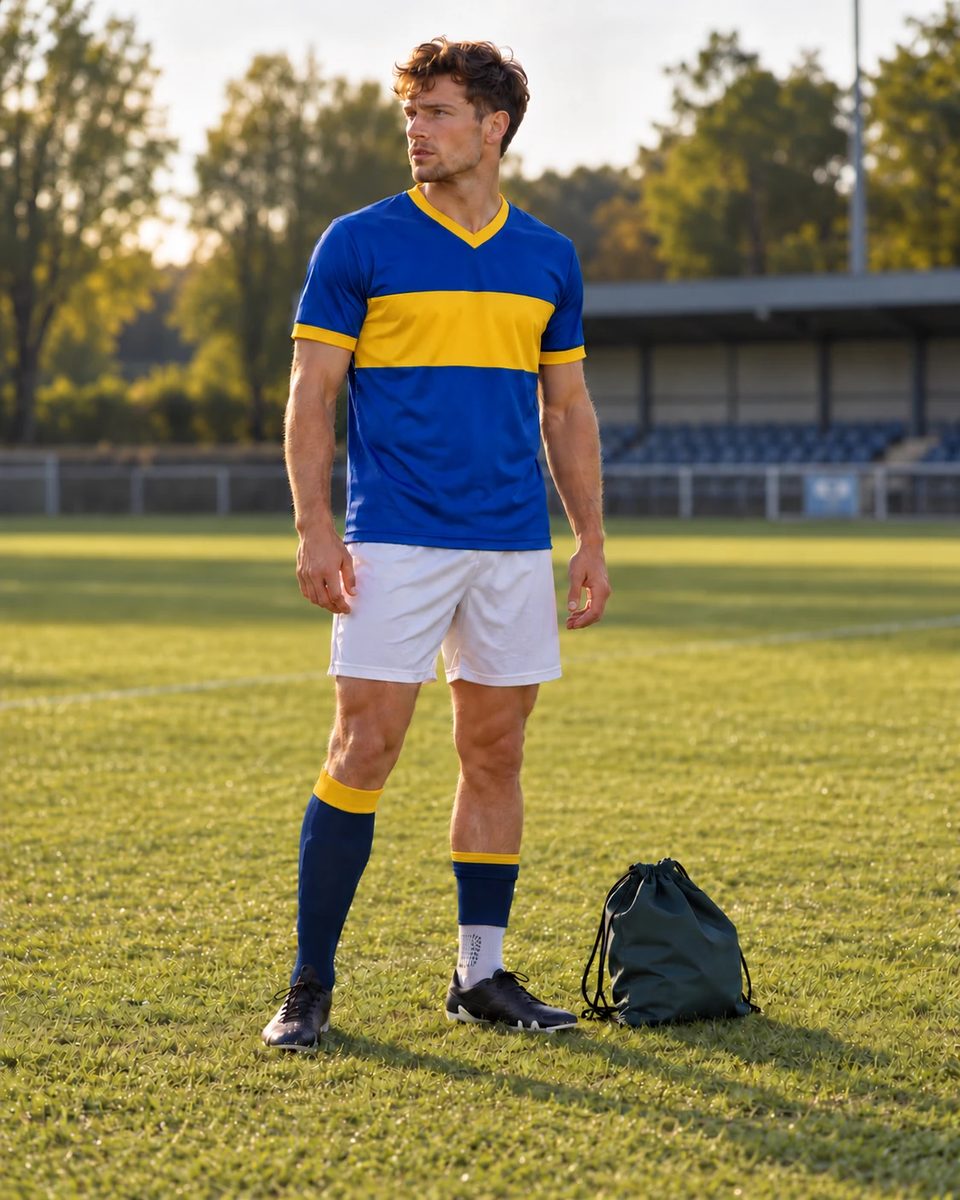
A football kit is more than a shirt. Players wear a set of parts that each have a job: some identify the team, some protect the player, and some are about grip and comfort. This guide goes through them in roughly the order a player puts them on, and links to a fuller guide for each.
What the Laws of the Game require
Law 4 of the Laws of the Game lists the compulsory equipment for every outfield player: a shirt with sleeves, shorts, socks, shin guards and footwear. Each team must wear colours that distinguish it from the other team and the match officials, and each goalkeeper must wear colours that distinguish them from everyone else on the pitch. Competitions and leagues add their own rules on top, so check yours, especially at youth level.
1. The shirt
The shirt is the part of the kit that says who you play for. Modern match shirts are made from lightweight polyester designed to move sweat away from the skin, and most clubs have separate home, away and often third shirts so that they can always contrast with the opposition. The badge, sponsor, kit maker’s logo and, increasingly, the player’s name and number all sit on the shirt.
If you wear an undershirt, the Laws require its sleeves to be the main colour of the shirt sleeve, or a pattern or colour that matches it exactly. For the history of shirt design and how numbers arrived on the back, read our guides to retro football shirts and shirt numbers and names.
The shorts
Shorts complete the team colours. Undershorts or tights worn underneath must be the same colour as the main colour of the shorts, or the lowest part of them, and a team has to be consistent about it. Many teams treat shorts and socks as interchangeable between their home and away kits to avoid colour clashes.
2. Shin pads
Shin pads, which the Laws call shin guards, are compulsory in matches. They sit under the sock, over the front of the lower leg, and protect against kicks and studs. They come in full-size and much smaller “mini” versions, and how you hold them in place depends on how you wear your socks. Our guide to football shin pads covers position, sizing and youth considerations.
3. Team socks
Team socks are part of the kit’s colours, so they matter to referees. Any tape or material worn over the outside of a sock has to be the same colour as the part of the sock it covers. Socks also hold the shin pads in place. Many players now cut the foot off their team socks and wear them as a tube over the shin pad, which leads to the next part of the kit. Read more in our guide to football socks and grip socks.
4. Grip socks
Grip socks are short socks with rubber or silicone pads on the sole, designed to stop the foot sliding inside the boot. Players who use them usually wear the cut-down team sock over the leg and the grip sock on the foot, so the referee still sees the team colours above the boot. They are optional, but have become a normal sight at every level of the game. The grip socks section of our socks guide explains how the combination works.
5. Football boots
Boots are the part of the kit that has to match the ground you play on. Firm natural grass, soft muddy pitches, artificial grass, older artificial turf and indoor courts each call for a different sole. Fit matters as much as the sole, and your socks and shin pads affect how a boot feels. Our introduction to football boots as part of the kit covers the main sole types and how to think about fit.
Goalkeeper differences
Goalkeepers follow the same Law 4 requirements but must wear colours that stand out from both teams and the officials. Most goalkeeper shirts are long-sleeved and some are padded at the elbows; padded shorts or trousers are allowed, and many keepers wear tracksuit bottoms in cold weather. Gloves are not compulsory but almost every goalkeeper wears them.
6. The boot bag
A boot bag is not part of the playing kit, but it is a good habit. Keeping boots separate stops mud and studs from damaging the rest of your kit, and a bag with ventilation lets boots dry out between games, which helps them last. Packing shin pads and grip socks in the same bag means they are never forgotten.
Match-day kit checklist
- Shirt, and undershirt if needed in a matching colour
- Shorts, and undershorts or tights in a matching colour
- Team socks, plus tape in the matching colour if you use it
- Shin pads, and sleeves or straps if you use them
- Grip socks, if you wear them
- Boots for the surface, plus a spare pair if conditions are uncertain
- Boot bag